NEWS
JOINT EFFORTS IN TACKLING CLIMATE CRISIS GAIN MOMENTUM
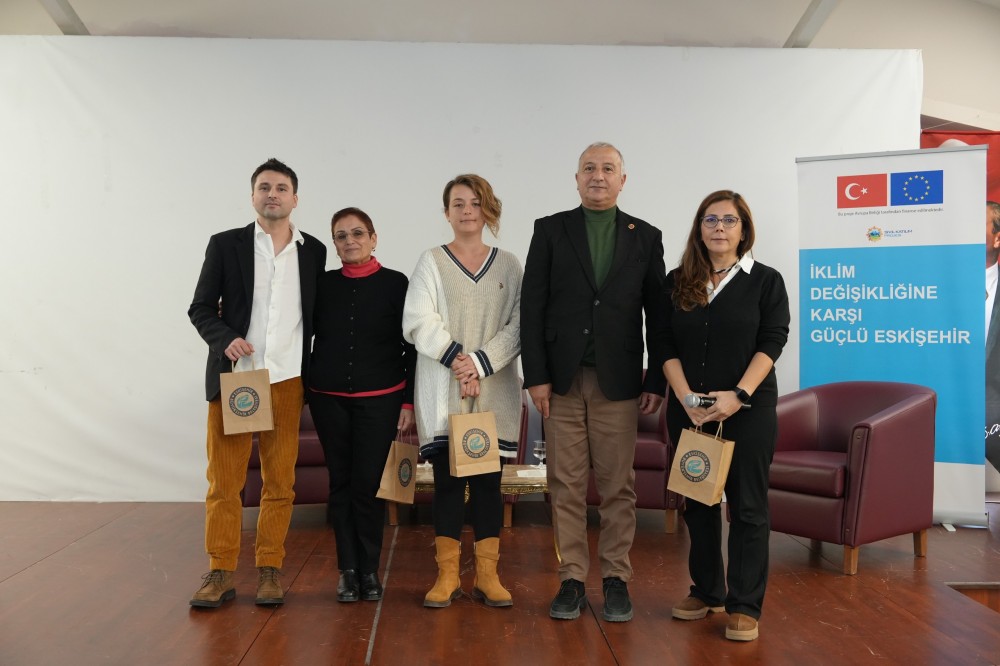
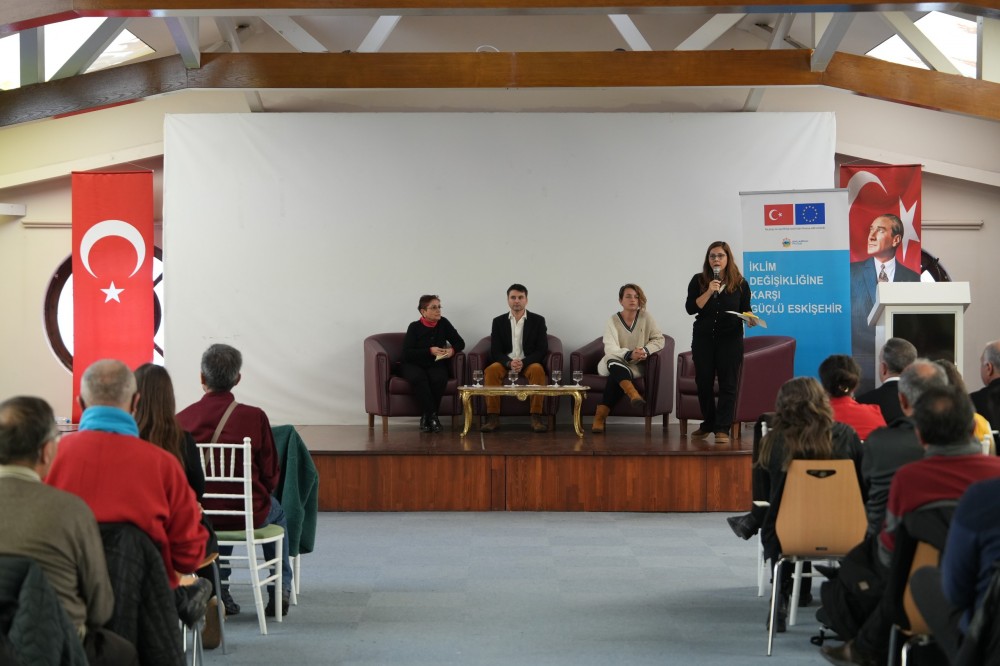
The panel "Cities, Climate, and Society: The Eskişehir Perspective", organized as part of the Strong Eskişehir Against Climate Change Project carried out in collaboration between Eskişehir Metropolitan Municipality and the TEMA Foundation, was held with strong participation from the residents of Eskişehir.
At the panel held at Eskişehir Haller Youth Center, discussions focused on how the city can become more resilient to the impacts of climate change, highlighting science-based solutions and community-centered approaches.
''A STRONGER, GREENER, AND MORE LIVABLE ESKIŞEHIR IS ACHIEVABLE''
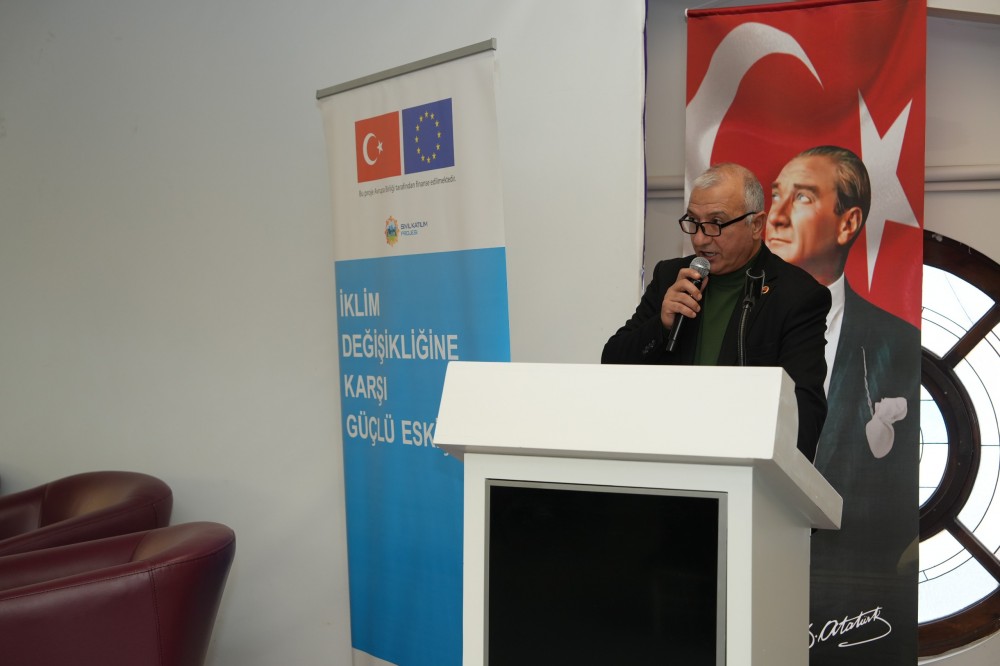
Delivering the opening speech at the panel, Eskişehir Metropolitan Municipality Deputy Mayor Vural Yörük emphasized that a lifestyle in harmony with nature is vital not only for Eskişehir but for the entire planet. He stated,
"As a society, we need to focus on solutions; it is possible to build a more resilient, greener, and more livable Eskişehir."
"THE CLIMATE ACTION CENTER WILL ENHANCE THE POWER OF COLLECTIVE INTELLIGENCE AND PARTICIPATION"
Eylem Tuncaelli, Head of Environmental Policies and International Relations at the TEMA Foundation, who moderated the panel, highlighted that the project plays an important role in strengthening democratic local governance mechanisms and civil society. She explained the work carried out as follows:
"We have identified the climate risk hazards facing Eskişehir by 2030. Following this, technical teams received the necessary training so that municipalities can continue these efforts using their own resources. The Climate Action Center, which we consider an important tool to strengthen public participation in decision-making processes, was also established. This project aims to foster collective intelligence, collaborative work, and social solidarity between local governments and citizens. Today, on December 5, International Volunteer Day, I would like to thank all who contributed to these efforts and dedicated their time selflessly."
"LOCAL AUTHORITIES PLAY A CRITICAL ROLE IN COMBATING MULTIPLE CRISES"
Batuhan Akkaya, Partner at Urban.koop Urban Studies Cooperative and Urban Planner, stated during the panel that local governments face multiple crises simultaneously, making the strengthening of local action critical in climate initiatives. Highlighting the importance of creating public spaces, Akkaya said:
"Today, local governments are grappling with multiple simultaneous crises, ranging from energy insufficiency to food and public health crises, and from pandemics to pollution and climate change--all while operating on limited budgets, personnel, and technical capacity. As COP30 has also highlighted, central government support is often insufficient in this context. Therefore, it is critically important for local governments to strengthen nature- and culture-focused approaches, incorporate research and impact analyses into decision-making processes, and use existing planning tools to support local climate action. Creating new public spaces that increase community participation and keeping these areas active through regular events forms an essential part of local climate policies. At the same time, joint learning networks established with civil society and other municipalities allow for the development of technical solutions, as well as the social and legal infrastructure, in areas such as energy efficiency and energy communities."
"DROUGHT IS THE BIGGEST THREAT IN ESKIŞEHIR"
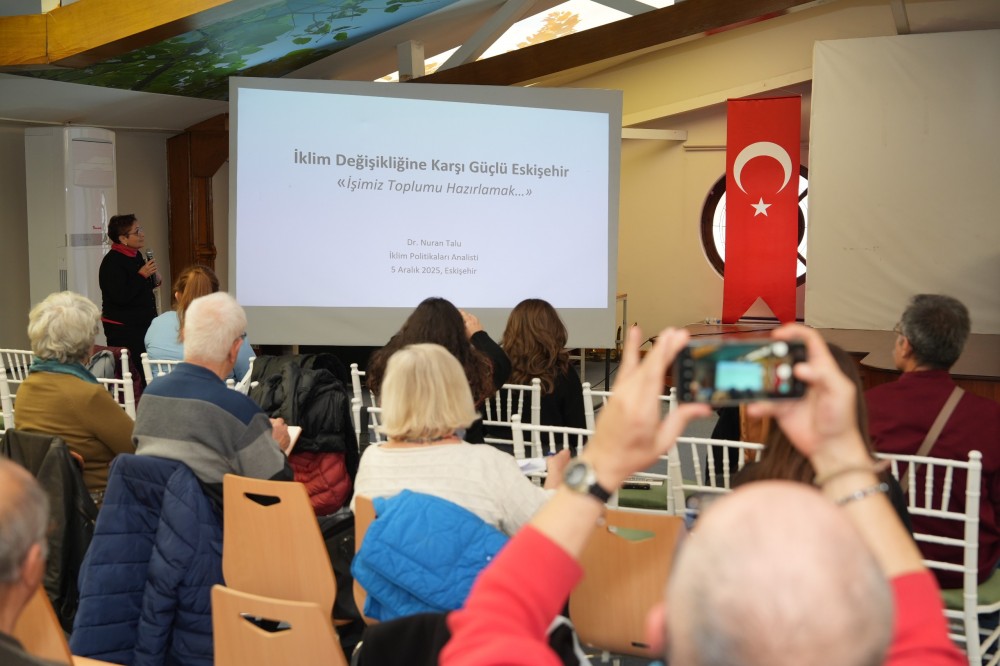
During the panel, Dr. Gökben Adana Karaağaç, an academic who presented scientific analyses assessing the potential near-future climate risks in Eskişehir under different emission scenarios, highlighted that the risk of drought is expected to increase significantly for the city. She stated,
"The greatest threat facing Eskişehir is drought."
Highlighting that a large portion of the city's water is used for agriculture, making water management increasingly critical, Karaağaç noted: "The growing risk of forest fires in some areas is also concerning. This summer's fire in Seyitgazi confirms our analysis results. Extreme temperatures are emerging as another escalating threat across the city. The impacts of the global climate crisis are being felt locally. Therefore, it is crucial for local governments to rapidly implement science-based mitigation and adaptation measures. We urgently need to develop solutions that are resilient to drought."
The panel, held with strong public participation, was regarded as an important step toward strengthening Eskişehir's science-based, participatory, and collaboratively developed roadmap against climate change. Key stakeholders, including Eskişehir Metropolitan Municipality and the TEMA Foundation, emphasized that effective climate action is only possible with the involvement of the community.
About the Project:
The Strong Eskişehir Against Climate Change Project was implemented within the framework of the Civil Engagement Project, funded by the European Union and led by the Union of Municipalities of Turkey and the Ministry of Foreign Affairs' Directorate for European Union Affairs, and carried out by UNDP.